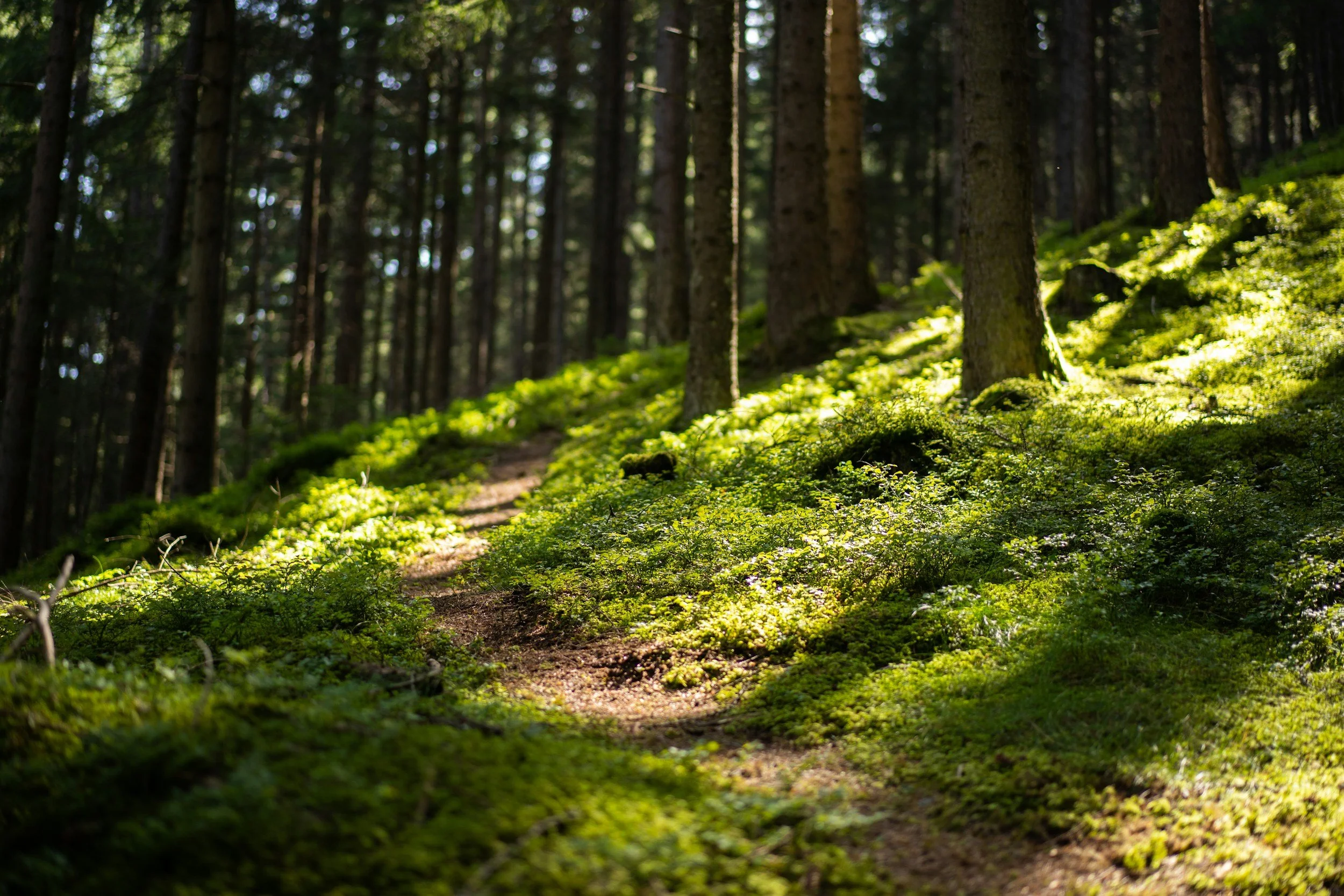
Biophilic interior design takes its cues from nature, offering serenity and rejuvenating the spirit.
Have you noticed when on a walk in the woods or through a wildflower meadow that you feel calmer, more at peace, more likely to be awe-struck by the bigness of the universe, and less panicked by your daily stresses? This is the power of biophilia at work. “Biophilia” is the love of living things and refers to the notion that humans are born with an affinity for nature and living organisms. When we are immersed in nature, we literally feel better. Biophilic design is grounded in the belief that immersing our built spaces with elements from the natural world offers a similar effect – people feel peaceful and recharged when surrounded by nature. Animals, plants, stone, wood – all organic elements that can be brought indoors for a soothing effect on the soul. Plants though, are unique in their power. Studies have shown that in the presence of greenery, blood pressure and heart rates drop, EEG brainwaves shift to patterns associated with relaxation, and overall mood lifts. Planted environments help us recover from stress, recoup our ability to focus, and even improve our academic achievement. Add plants to a room designated for your kids’ homework and watch their concentration, memory retention, creativity, and quality of work spike. Surround loved ones who suffer from dementia or depression with plants and watch a sense of wonder and peace overtake them. We all know the stress of clinical environments like hospitals, dental and doctor offices, which we may enter with dread and uncertainty, anticipating pain and discomfort. Studies show that greening these interiors with plants as a strategy to mitigate anxieties can have a direct impact on a patients’ ability to heal as well as their overall health outcomes. This adage rings true:
“Therapy is expensive but touching moss is free.”
Human evolution is so tightly tied to plants that the arrangement of cones and photoreceptors in our eyes allows us to detect exponentially more shades and nuances of green hues than any other color. This evolutionary adaptation allowed our ancestors to discern predators more readily in forests dense with a variety of foliage types, and also enhanced their ability to perceive ripe fruit against that same backdrop. Heightened sensitivity to green means our brains don’t need to work as hard to see it, which may contribute to the calming effect of green spaces.
Plus, plants and people are the perfect pairing – we each breathe in what the other exhales. Plants need carbon dioxide to photosynthesize; and of course the by-product they release is oxygen. We are each other’s lifeblood.

In this simple image of horse chestnut foliage, we can perceive a huge range of green tones.
References
William Browning, Catherine Ryan, Joseph Clancy. 14 Patterns of Biophilic Design: Improving Health & Well-Being in the Built Environment. Terrapin Bright Green. May 2025.
Gary Drevitch. What’s in a Color? For Humans, a Great Deal. Psychology Today. May 8, 2025.
T Mohamed Elsadek, Junfang Xie, Gao Jie. The Impact of Indoor Plants on Patient Recovery: Physiological and Psychological Effects in Dental Clinics. October 6, 2023. American Society for Horticultural Science.
Ke-Tsung Han, Li-Wen Ruan and Li-Shih Liao. Effects of Indoor Plants on Human Functions: A Systematic Review with Meta-Analyses. June 16, 2022. International Journal of Research and Public Health.
Robert Jimison. Why We All Need Green in Our Life. CNN Health. June 15, 2017.
Why Does the Human Eye See More Green? ScienceInsights. November 2025.